AI Strategy
Future of AI in Growth Marketing: 2027 Playbook
UE
Uptrix Editorial Team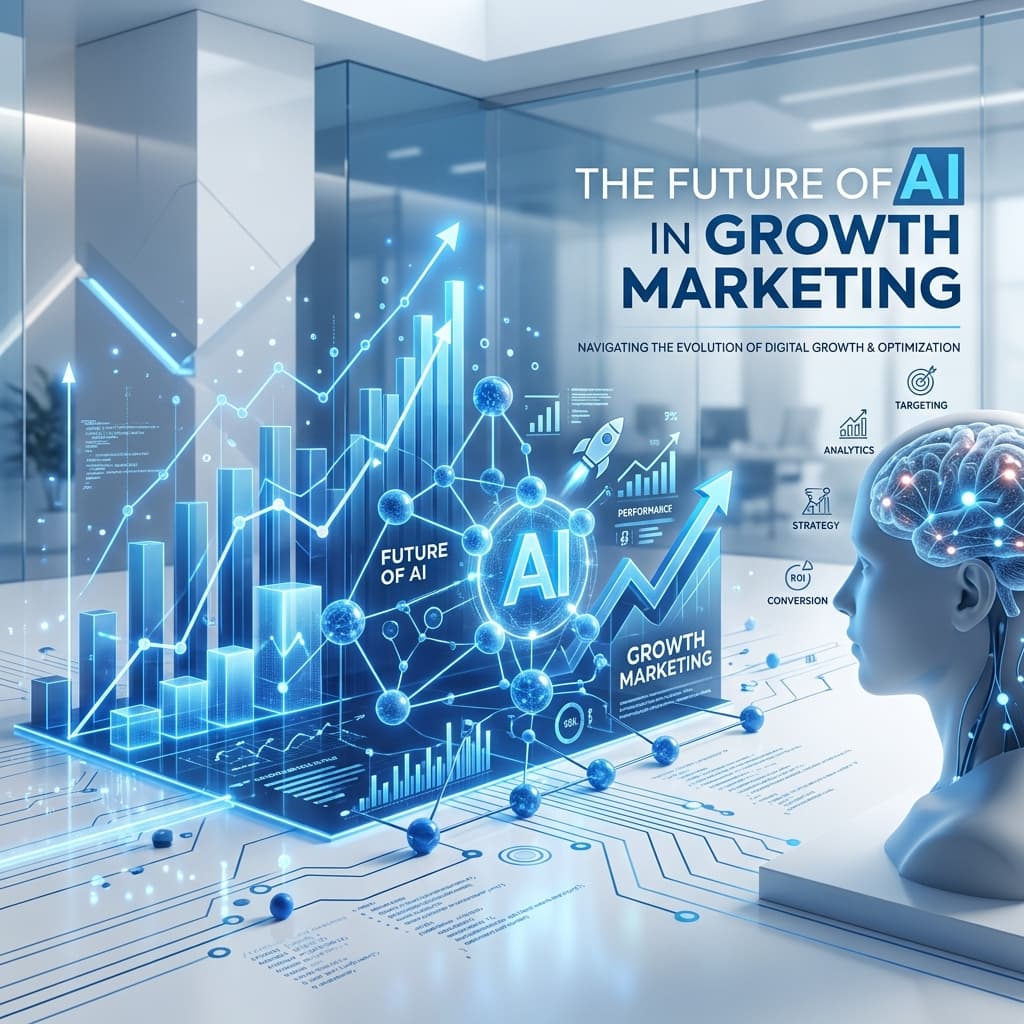
How modern growth teams are combining AI workflows, premium creative systems, and conversion infrastructure for compounding revenue.
- •High-performing teams treat AI as infrastructure—not a collection of disconnected tools. They design workflows with review gates, brand guardrails, and measurable outcomes.
- •If your data model cannot explain why a campaign won or lost, AI will only accelerate noise—not growth.
- •AI should accelerate your standards, not replace them.
- •Treat AI as repeatable operational infrastructure with clear QA review gates.
Why AI growth teams are winning now
The biggest change is not just tool adoption. The real shift is operational design: teams are building repeatable AI systems for research, creative production, and pipeline optimization.
Key Insight
High-performing teams treat AI as infrastructure—not a collection of disconnected tools. They design workflows with review gates, brand guardrails, and measurable outcomes.
73%
of marketers report improved efficiency using AI workflows when systems are operationalized with clear QA standards.
Build a high-signal data loop
Before prompting any model, define your signal architecture:
- event taxonomy for key conversion actions
- quality scoring for lead and opportunity health
- creative performance tagging by intent and audience
Key Takeaway
If your data model cannot explain why a campaign won or lost, AI will only accelerate noise—not growth.
Measurement stack
Framework
- 1Step 1Define conversion events and quality scores
- 2Step 2Tag creative by intent, audience, and offer
- 3Step 3Review performance weekly and update templates
Operationalizing AI Workflows
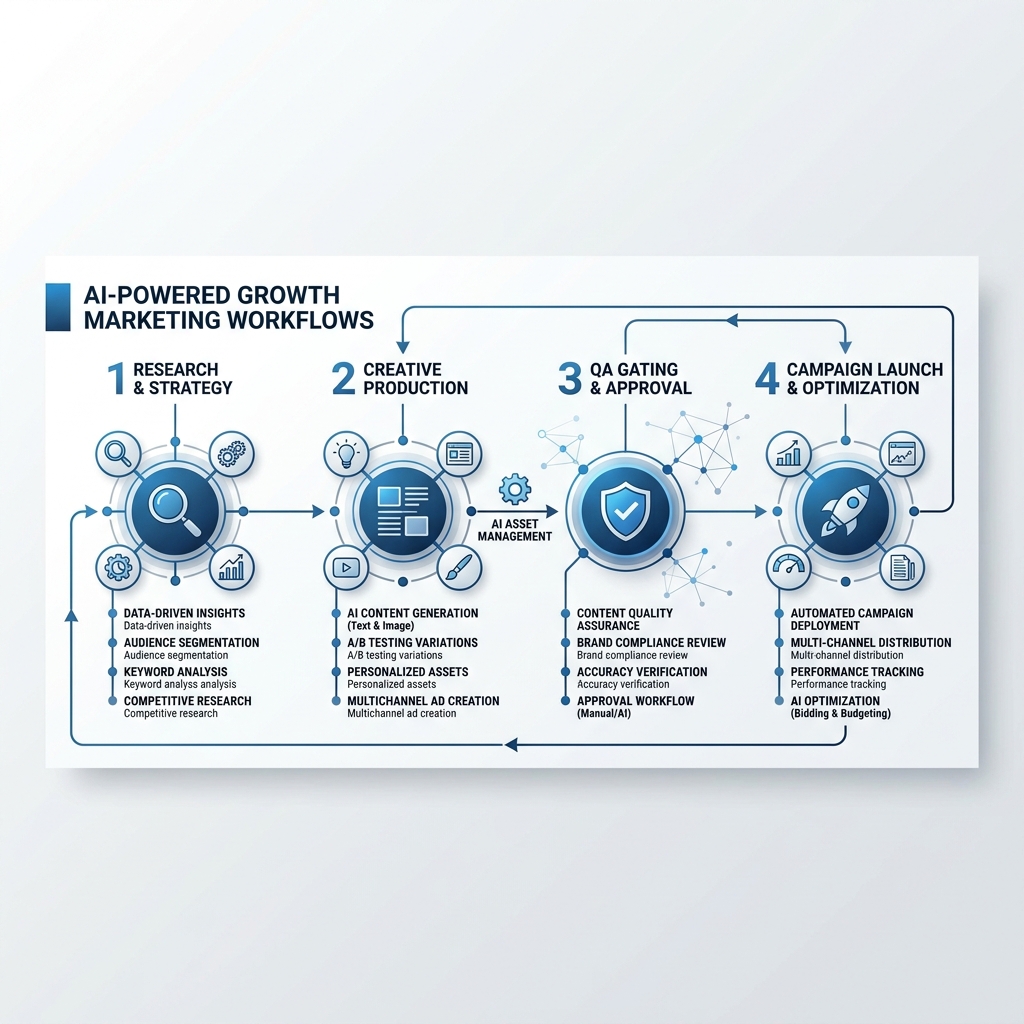
High-signal workflows require a clear transition from inputs to reviews to deployments. The following workflow shows how modern enterprise teams structure this system:
Traditional vs AI-Powered Growth
To visualize how operations shift, here is a breakdown of legacy methods compared to AI-driven growth frameworks:
| Optimization Area | Legacy Marketing Operations | AI-Driven Growth Marketing |
|---|---|---|
| Creative Asset Drafting | Manual, slow design sprint cycles | Automated generation & hyper-segmented variant testing |
| Bid & Budget Allocation | Weekly manual adjustments | Real-time predictive algorithm updates |
| Lead Lifecycle Scoring | Static, rule-based CRM configurations | Machine learning predictive lead scoring and routing |
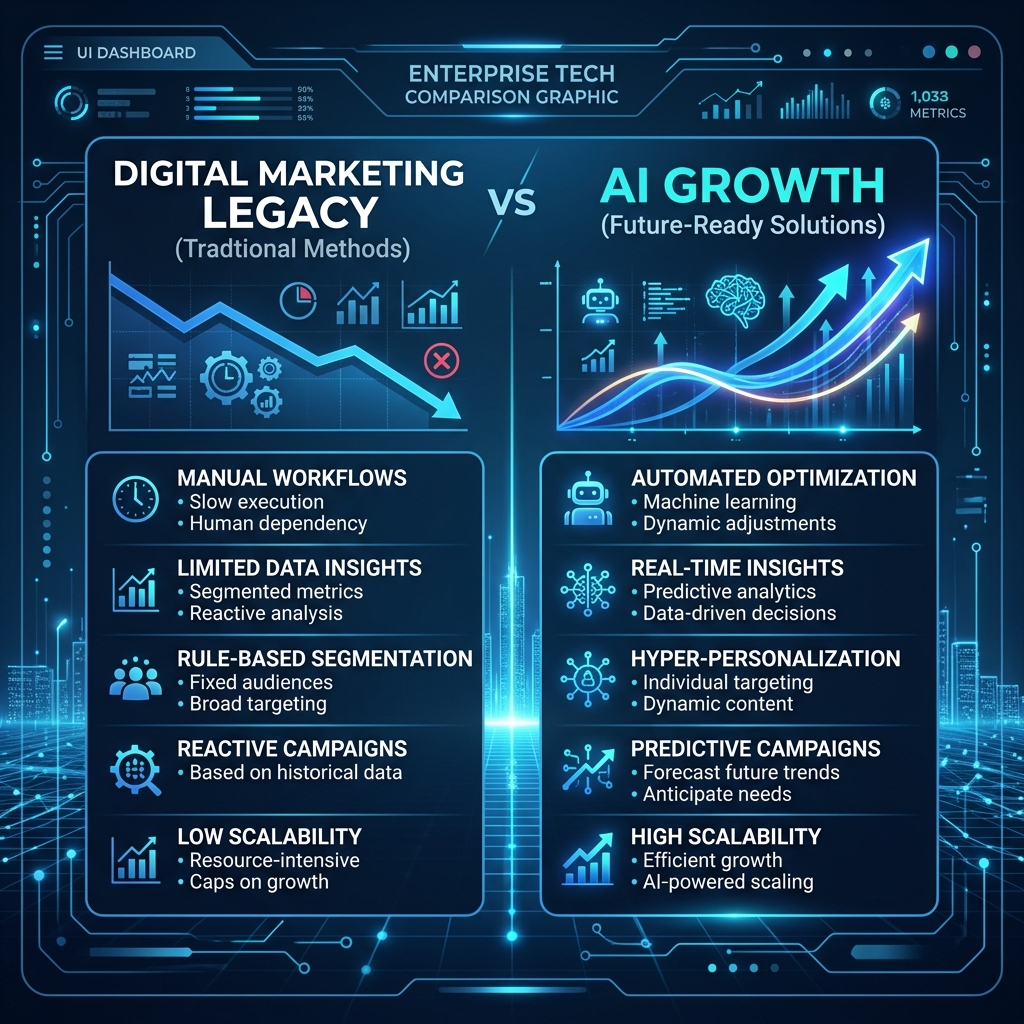
Digital Marketing Legacy vs AI Growth
The divergence in performance and speed is best represented by the contrast in capability scales:
Persona configuration sample
Here is an example structure of an AI agent persona configuration used to maintain brand alignment during drafting:
{
  "agency": "Uptrix Technologies",
  "tone": "Premium, authoritative, technical, growth-focused",
  "constraints": [
    "Avoid generic clickbait adjectives like 'revolutionary' or 'disruptive'",
    "Always back claims with measurable statistics and conversion indicators",
    "Maintain HSL-aligned color references in creative code templates"
  ],
  "targetAudience": "Enterprise CMOs and Growth Directors"
}
Content velocity without brand decay
Premium teams separate drafting from editorial quality control:
- AI generates variant drafts quickly.
- Human editors enforce positioning, clarity, and proof.
- Performance feedback updates templates weekly.
AI should accelerate your standards, not replace them.
Final framework
Use AI where speed and iteration matter most. Use human strategy where narrative, trust, and decision quality matter most. The overlap is where modern growth advantages compound.