Paid Media
How to Write ChatGPT Ads That Get Clicked
UE
Uptrix Editorial Team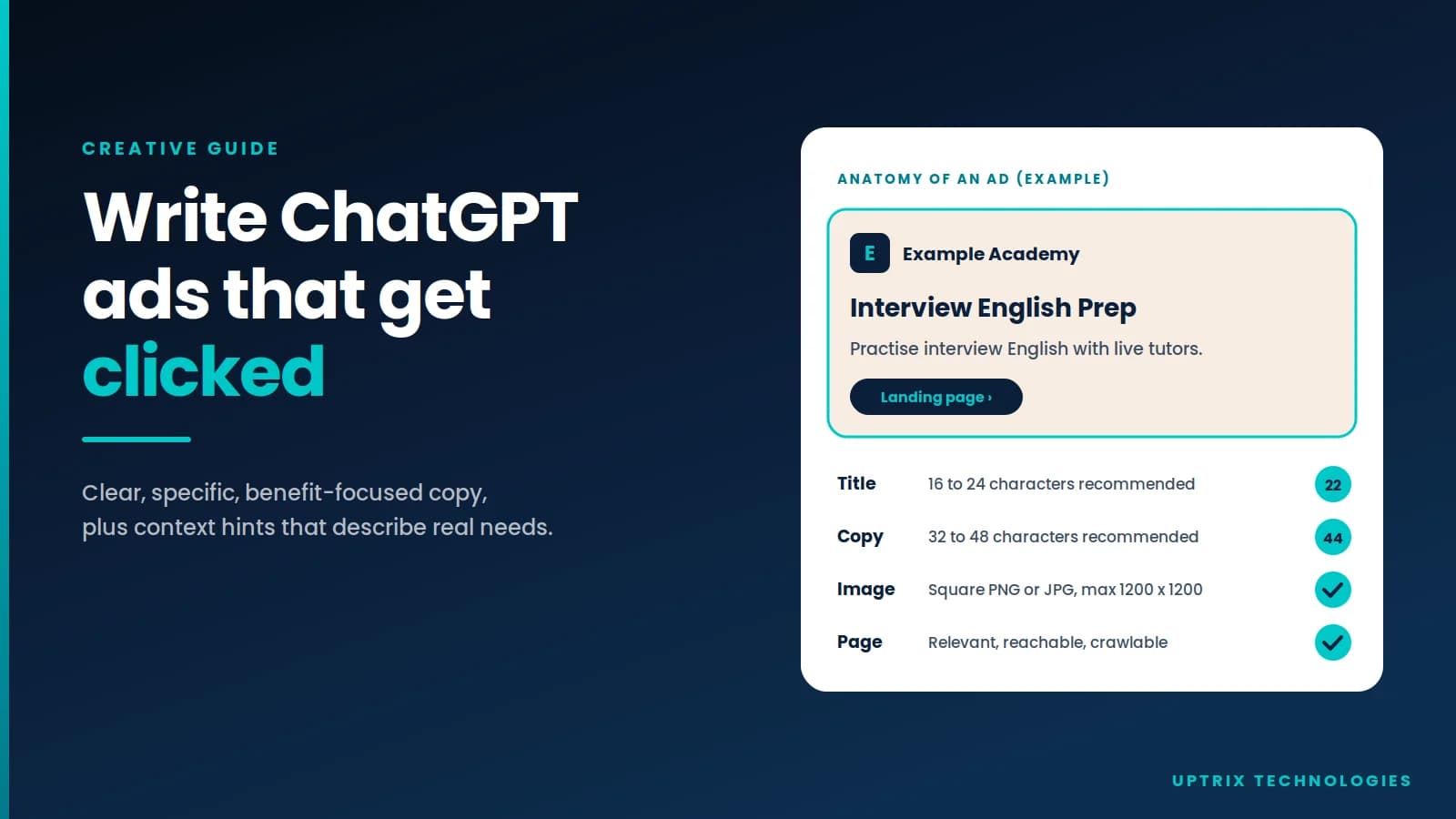
Write better ChatGPT ads: OpenAI's advice on titles, copy, variations, context hints, images and landing pages, with examples and common rejection reasons.
- •Explain the practical value, who it's for, and when it helps.
- •Keep titles to 16 to 24 characters and copy to 32 to 48.
- •Copy should add new information, not repeat the title.
- •Write several distinct variations for each offer.
- •Context hints work best as specific descriptions of real needs.
- •Link to the most relevant page and let OpenAI's crawlers read it.
Key Insight
ChatGPT ads that get clicked are clear, specific and useful, not catchy. OpenAI's own guidance favours benefit-focused copy that explains what you offer, who it's for and when it helps. Write several distinct variations per offer, describe real customer needs in your context hints, and send people to the most relevant page, not your homepage.
The problem
Most advertisers bring their Google or Meta habits to ChatGPT: short keyword-stuffed headlines, urgency, "click here." But people seeing a ChatGPT ad are in the middle of asking for help. An ad that reads like a pushy banner feels out of place, and OpenAI's platform rewards relevance, not volume.
This guide covers what OpenAI recommends for titles, copy, context hints, images and landing pages, with examples from a made-up brand.
The short answer
Write ads that answer "what is this, who is it for, and why would it help right now?" Keep the title short and informative, use the copy to add a new detail, and create several different angles for each offer. Then support those ads with specific context hints and a landing page that matches the promise.
Want the basics first? Read ChatGPT Ads: How They Work and Whether Your Business Should Try Them.
How is writing ChatGPT ads different from Google or Meta ads?
OpenAI's ad creation guide says ChatGPT ads need a different approach from keyword-based platforms. Instead of matching ads to a short search query, ChatGPT looks at the intent of the conversation and other relevance signals.
In practice, that means:
- No keyword stuffing. There are no keywords to match. The platform reads meaning.
- Usefulness over urgency. OpenAI says ads should feel helpful to what the user is trying to do.
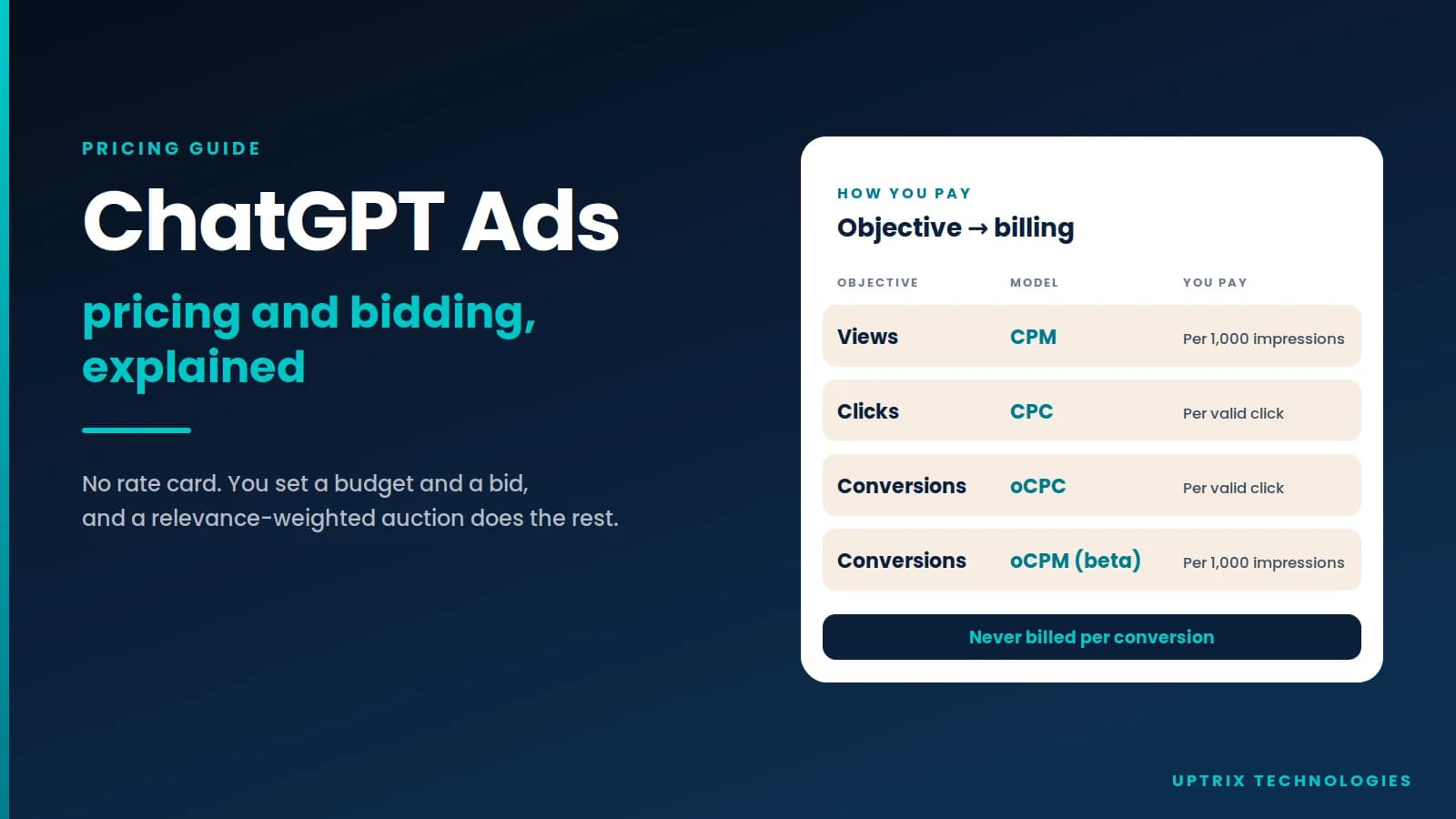
- Relevance affects cost. ChatGPT uses a relevance-weighted auction, so a better-matched ad can compete without simply bidding more. Our pricing and bidding guide explains how.
How do you write a strong ad title?
OpenAI's advice for titles is to spell out the value clearly, keep them concise, and choose informative details over broad marketing language. The recommended length is 16 to 24 characters (50 maximum).
Examples for our made-up brand, Example Academy, an online English course:
| Weak title | Why it's weak | Stronger title |
|---|---|---|
| Best Courses Online!! | Vague, hype, no clear offer | Spoken English Classes (22) |
| Online English Course | Clear, but says nothing specific | Interview English Prep (22) |
Numbers in brackets are character counts. Avoid claims you can't back up, like "best" or "number one." OpenAI's ad policies prohibit misleading or unfounded claims.
How do you write ad copy that adds value?
OpenAI says ad copy should complement the title, not repeat it, and should expand on benefits, features or use cases in plain language. The recommended length is 32 to 48 characters (100 maximum).
| Weak copy | Stronger copy |
|---|---|
| Click here now for amazing deals on courses! (44) | Practise interview English with live tutors. (44) |
| Improve your English with our English course. | Evening classes for working adults. (35) |
The stronger versions tell the reader who it's for and what they'll actually get. Each could pair with a different title to create another variation.
How many ad variations should you write?
More than one. OpenAI's guidance is to build for coverage: a larger, more varied set of ads for each offer helps its platform find more conversations where your ad is relevant.
The key word is distinct. OpenAI says each title and copy variation should bring a different angle, not reword the same message. For Example Academy, angles could be:
- The goal: preparing for job interviews
- The format: live evening classes
- The audience: working adults
- The flexibility: weekend batches
Inside an ad group, OpenAI also recommends including multiple ads to test different approaches to the same theme.
How do you write context hints that match real conversations?
Context hints sit at the ad group level and describe when your ads may be useful. OpenAI's ad group guide recommends clear, specific phrases about what you offer, who it helps, or when it's useful.
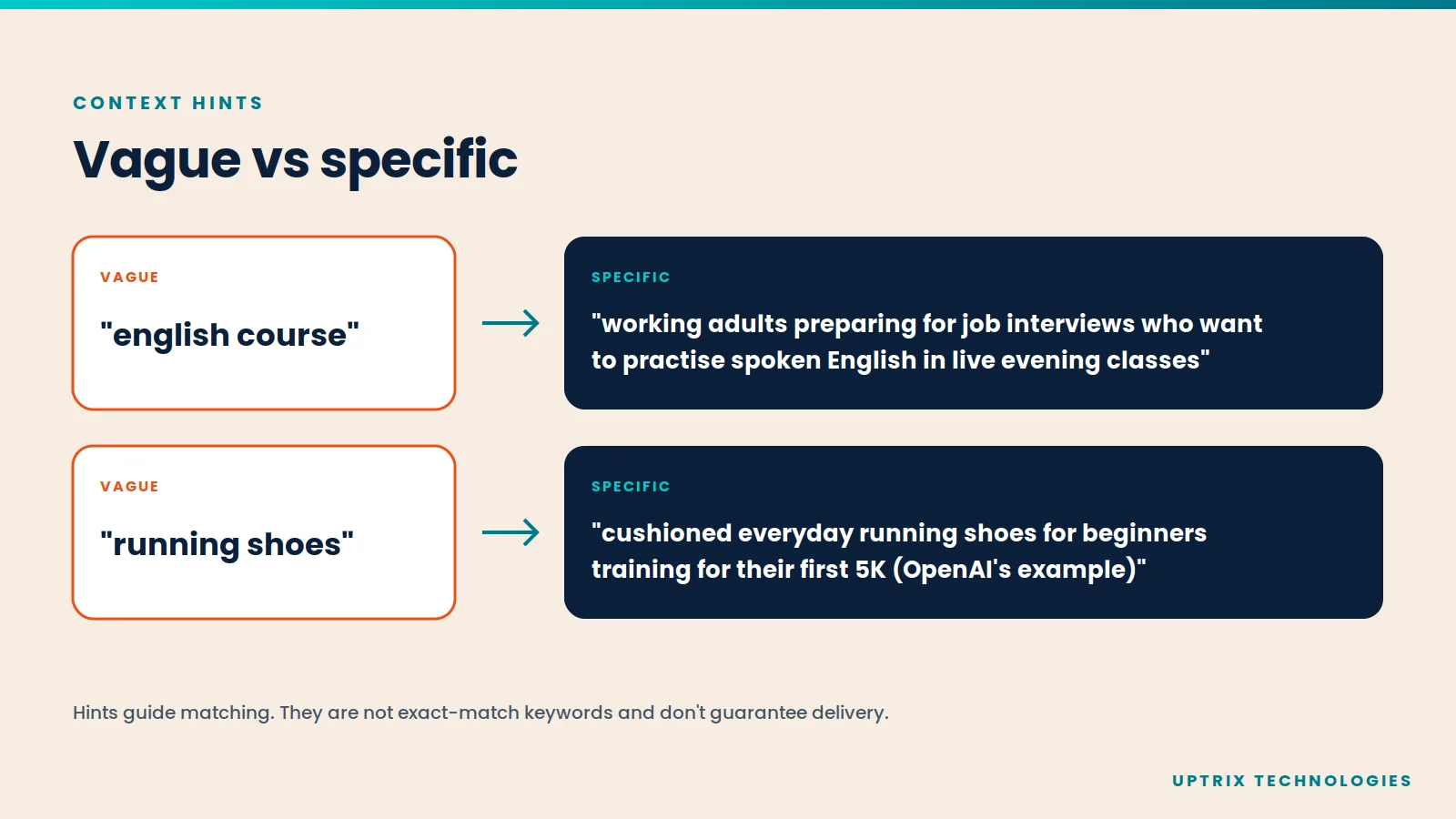
OpenAI's own example: "cushioned everyday running shoes for beginners training for their first 5K" is more useful than "running shoes."
Three rules to follow:
- Describe a need, not a keyword. Hints are not exact-match keywords and don't guarantee delivery.
- Add what the ad doesn't say. OpenAI suggests using hints for context beyond your title and copy.
- Split different needs into different ad groups. OpenAI's example is a plumber with separate groups for emergency repairs and preventive maintenance.
What makes a good ChatGPT ad image?
OpenAI recommends simple, relevant images that support the ad's message, and advises against abstract or cluttered visuals. Where possible, the image should match the title and copy.
Technical specs, from OpenAI's launch guide: PNG or JPG, square, no larger than 1200 x 1200.
Two practical tips:
- Use a clear product photo or a simple scene showing the benefit.
- Don't design an image that looks like part of ChatGPT itself. OpenAI's ad policies ban ads that imitate its interface.
Why does the landing page matter so much?
The landing page is part of the ad. OpenAI's guidance is to:
- Link to the most relevant page, such as a product or collection page, rather than your homepage.
- Keep the ad and page closely connected, so people move smoothly from interest to action.
- Add UTM tags to each ad's link for tracking.
- Keep pages reachable, and don't block OpenAI's crawlers (OAI-AdsBot and OAI-SearchBot).
Consistency matters for approval too. OpenAI's ad policies say the ad and landing page must match, so an approved ad can't lead to a page with content that isn't allowed.
What gets ChatGPT ads rejected?
Based on OpenAI's ad policies, common reasons include:
- Misleading claims about pricing, results, affiliations or comparisons
- Offensive or shocking language, even in product names
- Imitating ChatGPT's interface
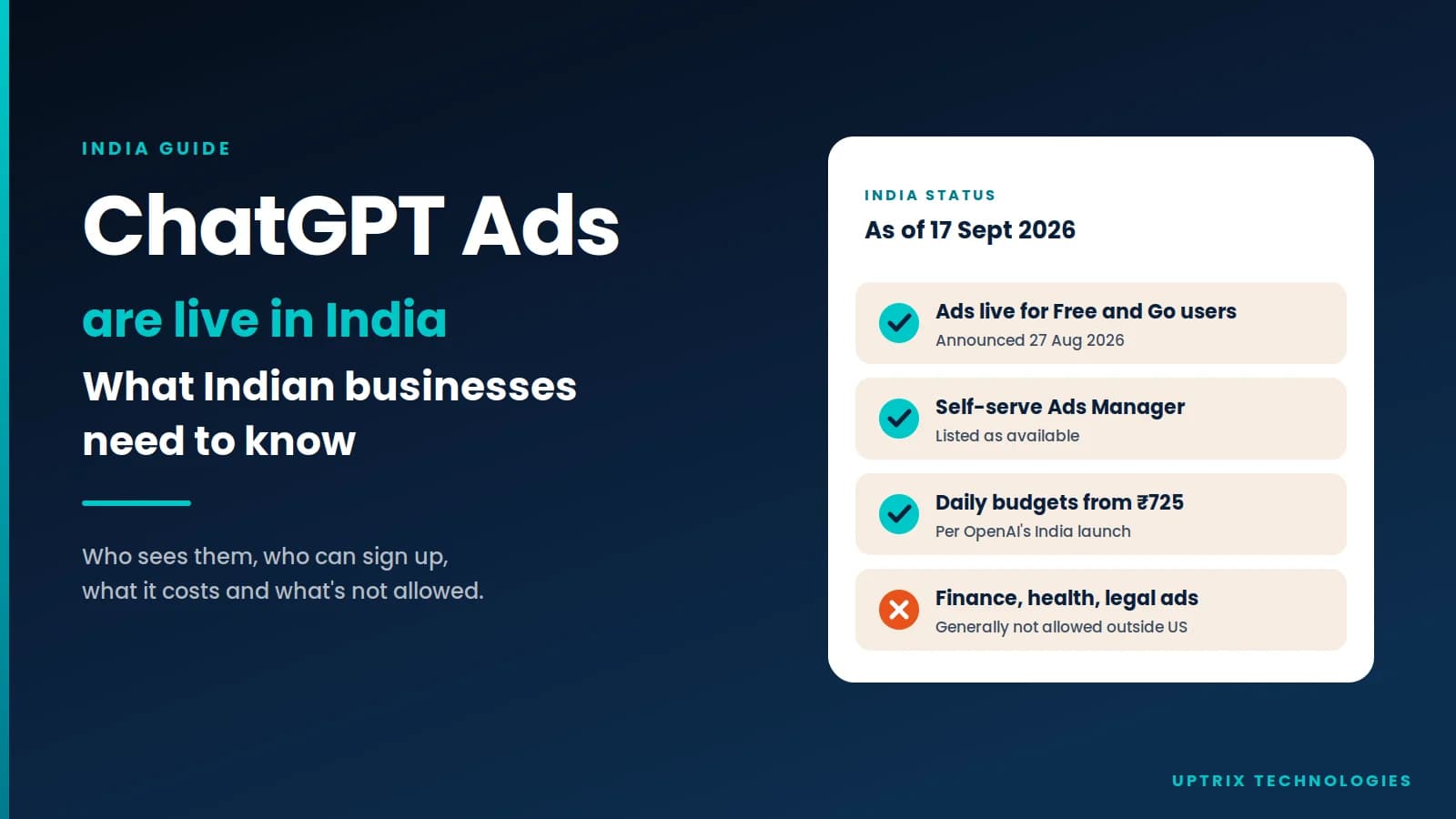
- Restricted categories, such as finance, health and legal services outside the US
- Landing pages that don't match the ad or can't be reviewed
If your category is borderline, check the rules in our main ChatGPT ads guide before writing anything.
Is there a shortcut for writing ads?
Two, but both need your review.
- Suggested ad drafts: OpenAI says Ads Manager may offer "Add new ad," which prefills a draft from your website's existing metadata. It doesn't write new copy with AI.
- AI creative help: OpenAI announced in September 2026 that Ads Manager can suggest copy and images based on your landing page, which you edit before using.
Either way, apply the rules above before you publish.
What Uptrix Technologies believes about this
We think ChatGPT ads reward the same thing good salespeople do: listening first, then offering something genuinely useful. Clever hooks matter less than clear answers.
Using the Uptrix 5S™ framework, creative sits in the Ship stage, but it depends on the Strategy stage: you can only write specific ads once you know exactly who you're for.
Conclusion
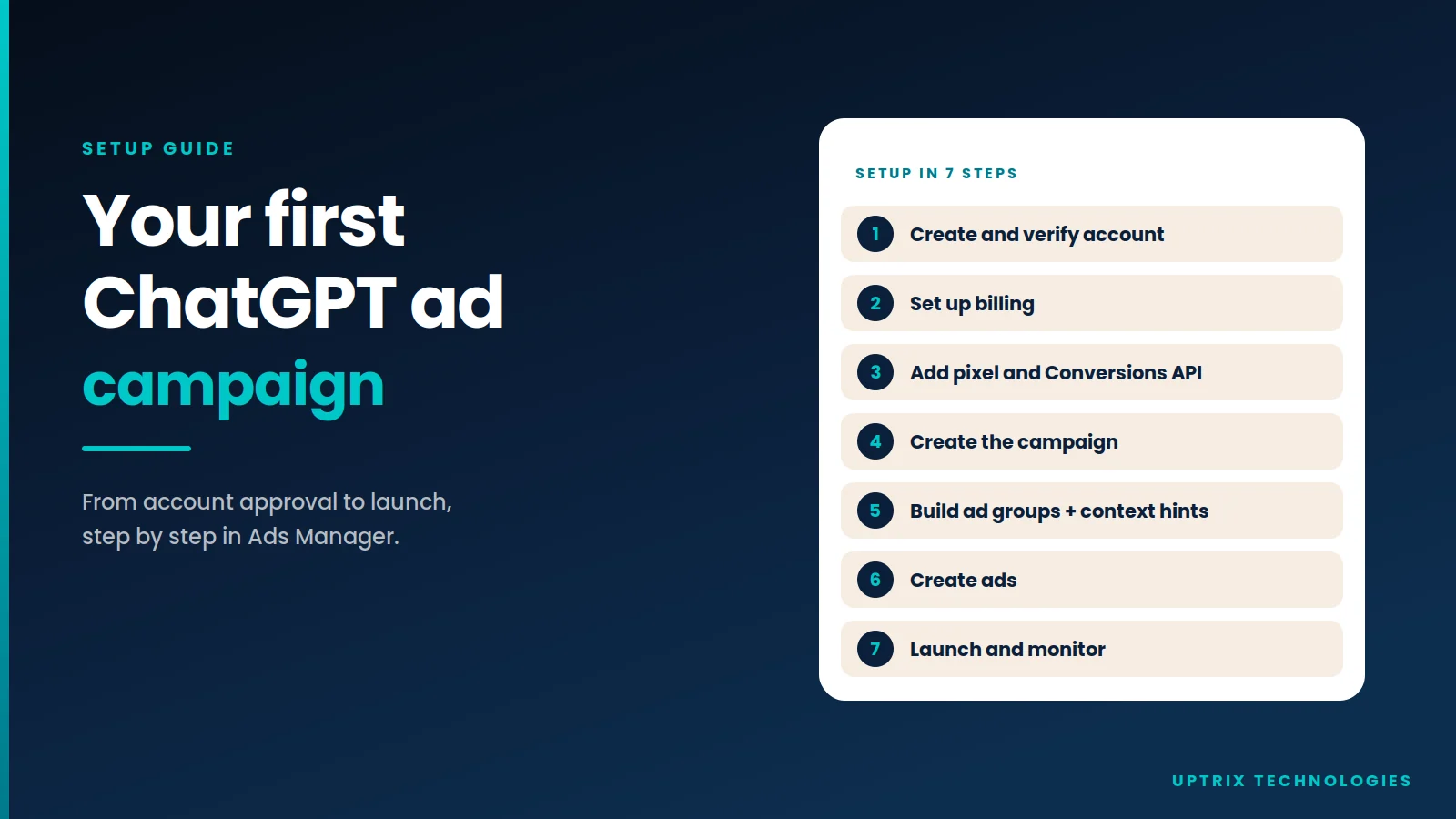
Strong ChatGPT ads are specific, honest and useful: short informative titles, copy that adds a new detail, several distinct variations, focused context hints, and a landing page that keeps the promise. Once your ads are ready, follow our step-by-step setup guide to launch them.
Want help writing your first ChatGPT ads?
Uptrix Technologies is a growth marketing company. One team owns strategy, execution and performance, from the first strategy call to scale. Our paid media team can write and test your ads, or book a growth consultation to start with a review.